
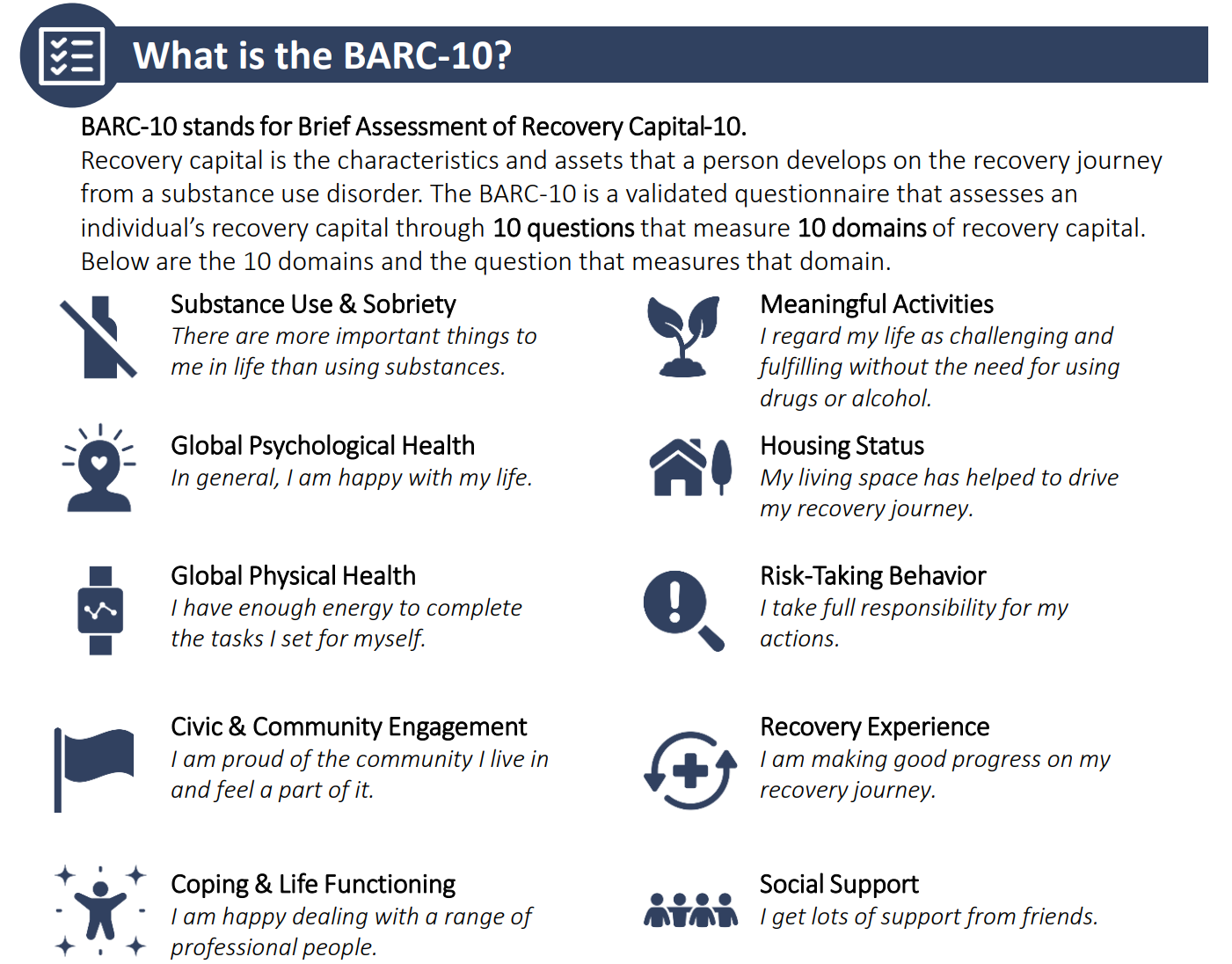
Addiction is a complex and multifaceted condition that affects individuals in different ways. To effectively treat and manage addiction, it is important to have a clear understanding of an individual’s specific needs and challenges. One way to gain insight into the severity of addiction is by using a standardized assessment tool, such as the BARC-10.
The BARC-10, or Brief Addiction Rating Scale, is a 10-item questionnaire designed to measure the severity of addiction across three domains: physical dependence, emotional dependence, and loss of control. Each item is rated on a 4-point scale, with higher scores indicating greater addiction severity. The BARC-10 has been found to be a reliable and valid measure of addiction severity, with strong test-retest reliability, internal consistency, and construct validity.
One of the key benefits of the BARC-10 is its ability to provide a comprehensive assessment of addiction severity. The physical dependence domain assesses withdrawal symptoms and tolerance, while the emotional dependence domain evaluates the individual’s emotional attachment to the substance or behavior. The loss of control domain measures the individual’s ability to regulate their substance use or behavior. By assessing these different aspects of addiction, the BARC-10 provides a more complete picture of an individual’s needs and challenges.
The BARC-10 has been used in a variety of settings and populations, including inpatient, outpatient, and community samples. It has demonstrated good sensitivity and specificity for detecting addiction severity, making it a useful tool for both clinical practice and research. The BARC-10 is a self-report measure, which may be subject to bias, but it remains widely accepted as an effective tool for assessing addiction severity.
In clinical practice, the BARC-10 can be used to guide treatment planning and monitor progress over time. For example, by administering the BARC-10 at the beginning of treatment, clinicians can identify areas of greatest need and target interventions accordingly. By administering the BARC-10 periodically throughout treatment, clinicians can track progress and make adjustments as needed.
In research, the BARC-10 can be used to evaluate the effectiveness of different treatments and interventions for addiction. By comparing BARC-10 scores before and after treatment, researchers can determine the extent to which a particular intervention reduces addiction severity.
In conclusion, the BARC-10 is a valuable tool for assessing addiction severity. By providing a comprehensive evaluation across multiple domains, it supports effective treatment planning and progress monitoring. It is widely accepted in both clinical and research settings and helps identify the key areas that need to be addressed in addiction treatment.
Pennsylvania Recovery Center is proud to use the gold standard in measuring patient treatment outcomes and will be posting yearly data starting in 2024.
Reach out to us today!