For Families · Support · Getting Help
You are reading this because someone you love is drinking or using, and you have run out of ways to un-see it. This page is for you: how to support them, how to actually help, and what your role looks like once treatment starts.
You do not have to wait until they agree to call. We talk with families every day whose loved one has not said yes to anything yet. The call is confidential, and our phones are answered 24/7.
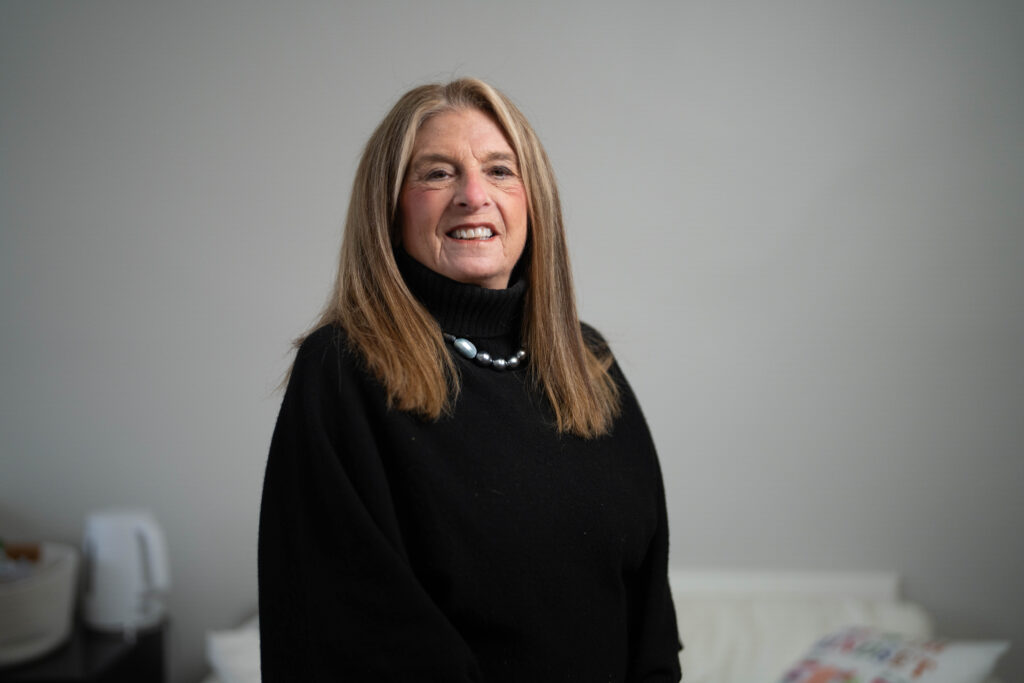
Meet the Person Behind Our Family Program
Call with them, not for them
The most useful thing most families do is sit next to their loved one while they call (610) 233-4342. Admissions can answer questions from both of you at once, and it keeps your loved one in the driver's seat of their own care.
Treat it as a health condition
Addiction is a treatable medical condition, not a character flaw or a lack of willpower. The language you use at home — 'my son has a substance use disorder' versus 'my son is an addict' — shapes whether people feel able to ask for help.
Make the logistics boring and easy
Offer a ride to the evaluation, help arrange time off work, watch the kids during evening IOP groups. Programs fail over missed rides more often than missed motivation. Our PHP and IOP schedules are built around work and family on purpose.
Ask what they need instead of guessing
'Do you want advice, or do you want me to just listen?' is a better opening than a lecture. People in early recovery are drowning in opinions; being asked is rare and it builds the trust the treatment will rely on.
Get support for yourself
Al-Anon, Nar-Anon, and your own therapist are not a consolation prize — they are part of the treatment plan. Families who work their own recovery consistently do better over the long run, and so do their loved ones.
Play the long game
Recovery is measured in months and years, not in one heroic intervention. Consistency — showing up, keeping boundaries, staying reachable — matters more than any single conversation.
Ultimatums you won't keep
'This is your last chance' only works if everyone is prepared to follow through. Empty threats teach your loved one that boundaries are noise, which is the opposite of what treatment will ask them to build.
Rescuing from every consequence
Paying the legal bill, calling in sick for them, replacing the money that went missing. Each rescue removes the natural pressure that often pushes someone toward an evaluation — and delays the day they ask for help.
Arguing while they're using or in withdrawal
Conversations that matter should happen sober, rested, and ideally with a clinician involved. Nothing resolved at 2 a.m. in a hallway argument has ever stayed resolved.
Keeping the secret to protect them
Secrecy is how addiction stays comfortable. You do not need to broadcast anything, but quietly hiding the problem from the rest of the family usually means everyone but the addict is managing the disease.
Expecting a program to undo years in a month
Treatment works, and it is a beginning rather than a finish line. Families who expect a fixed person to come home in 30 days often withdraw support exactly when it matters most.
Numbing out yourself
Many family members cope by working more, drinking more, or simply shutting down. Your loved one will notice. Taking care of your own health is not abandonment — it is modeling the behavior you are asking of them.

Clinically reviewed by Andrea Kiotis, MA, LPC, CAADC — Clinical Director.
Last updated:
Most families who get someone into treatment follow roughly the same path. Here it is, in order.
Pick a sober moment, lead with concern instead of evidence, and name one specific thing you have seen: missed work, withdrawn at holidays, the hospital visit. End with an offer, not an ultimatum: 'I will sit with you while you call.'
Our phones are answered 24/7, and we talk with families every single day whose loved one has not agreed to anything yet. We can explain the levels of care, what an evaluation involves, and what to say — with or without your loved one on the line.
Most major insurance plans cover our programs. You can verify benefits confidentially through our insurance form or by phone, before your loved one has committed to anything. You can also pay privately.
An evaluation is a clinical assessment, not a commitment. It determines the right level of care — from IOP to PHP to a detox referral — and it is where the treatment plan actually gets written.
Because we are outpatient, your loved one sleeps at home and keeps their job while in treatment. The first week is the hardest; rides, meals, and childcare from family are the difference between starting and not starting.
Family sessions, family education, and a relapse plan are all part of how we treat. With your loved one's written consent, you are part of the process — not a bystander waiting for the outcome.
Not sure where to start? Start with a phone call — ours are answered 24/7.
Call (610) 233-4342Families are part of treatment here, not visitors to it. Here is what your involvement actually looks like at each stage.
Admissions speaks with you and your loved one together or separately. We explain what the programs look like day to day, verify insurance, and schedule the evaluation — often within days of the first call.
A licensed clinician assesses substance use, mental health, medical history, and living situation. Family perspective is often helpful here, with your loved one's permission, because people rarely report their own use accurately.
PHP clients attend full clinical days; IOP clients attend three to five groups a week around work and school. Your role in this phase is practical: transportation, a stable household, and not interrogating them every night about what happened in group.
With written consent, your loved one's therapist coordinates family sessions — in person in Phoenixville, Center City Philadelphia, or Avondale, or by secure video. Sessions work on boundaries, communication, money and trust, and a relapse plan made calmly in advance.
Federal law (42 CFR Part 2) and HIPAA protect treatment records tightly. Without your loved one's written consent, we cannot confirm they are even in the program. With consent, you will know the plan, the schedule, and who to call.
Discharge includes an aftercare plan — alumni program, recovery housing referrals if needed, ongoing therapy, and community supports. Families who keep their own recovery going (Al-Anon, therapy) are the strongest predictor we see of the plan surviving contact with real life.
Because our programs are outpatient, your loved one comes home every night. That makes the household part of the treatment — and it is why we put so much weight on family sessions, education, and relapse planning.
Come in with them, or come in alone — either is fine. Families are welcome at every one of our offices.
2215 Kimberton Road, Phoenixville, PA 19460
Our original office, serving Chester and Montgomery County. Home of our PHP and IOP programs.
Visit the Phoenixville office page →1026 Winter Street, Philadelphia, PA 19107
Full PHP and IOP schedules for Philadelphia and the Main Line, blocks from public transit.
Visit the Philadelphia office page →1284 Gap Newport Pike, Avondale, PA 19311
Serving southern Chester County with the same clinicians, levels of care, and family programming.
Visit the Avondale office page →Insurance accepted












Don't see your plan? Call (610) 233-4342 — we'll check your benefits.
Yes, and please do. We talk with families in exactly this situation every day — how to raise it, what an evaluation involves, what an interventionist does, and which approaches reliably backfire. The call is confidential and carries no obligation.
Not without their written consent — federal confidentiality rules for substance use treatment are strict, and we follow them completely. What we can promise is that consent-based family involvement is built into our programs, and most clients choose to include family.
It depends on the person. Our programs are not fixed-length: progress in PHP, IOP, and virtual IOP is reviewed continuously by your loved one and their clinical team together. We do not promise a set number of weeks, and you should be wary of any program that does.
A relapse is a return of symptoms, not the end of recovery — and it is a reason to call us, not to give up. We work with families on a relapse plan before discharge, so there is already an agreed answer to 'what happens if.'
Most major insurance plans cover our programs. You can verify benefits through our insurance verification form or by phone at (610) 233-4342 — confidentially, and before your loved one has committed to anything.
Detox is a referral for us: we assess whether medically supervised withdrawal is needed and connect your loved one with a trusted detox provider, then bring them into PHP or IOP afterward. Alcohol and benzodiazepine withdrawal can be dangerous — never let someone quit those cold turkey without medical guidance.
Citations link to original government and research sources. This page is educational and is not medical advice.
Call us with questions, with your loved one, or on your own. Confidential guidance for families, 24/7.